Table of Contents
- Key Takeaway: Top Housing Hubs for Medical Staff
- Finding the Perfect Home Near Spokane’s Medical District
- Author Credentials: Local Expertise You Can Trust
- Editorial Transparency and Data Sourcing
- Lower South Hill & Cliff-Cannon: The Medical District Core
- Upper South Hill (Rockwood & Manito): Historic Luxury for Established MDs
- Kendall Yards: Premium Walkability for Travel Nurses and Young Professionals
- South Perry District: A Vibrant Community Vibe
- Audubon-Downriver: The Quiet Haven for Night-Shift Workers
- Spokane Valley: Suburban Comfort and MultiCare Valley Access
- Beyond the Algorithm: Real-World Commutes and Shift-Worker Realities in Spokane
- Frequently Asked Questions About Moving to Spokane
- Navigating the Market: Limitations and Alternative Options
- Ready to Find Your Home in Spokane’s Medical District?
Key Takeaway: Top Housing Hubs for Medical Staff
- Lower South Hill (99204): The most coveted zip code for medical residents, offering a 3-minute commute and walking distance to both Sacred Heart and Deaconess.
- Kendall Yards: The premier choice for travel nurses and young professionals, featuring modern, walkable urban living just 7 minutes from the medical district.
- Upper South Hill (Rockwood/Manito): The preferred enclave for established physicians seeking historic luxury, top-tier schools, and a quiet 5-to-10-minute downhill commute.
- Audubon-Downriver: The ultimate quiet-zone neighborhood, offering daytime silence and mature tree canopies highly recommended for night-shift workers.
Finding the Perfect Home Near Spokane’s Medical District
Navigating a 12-hour shift at the hospital is grueling enough without adding a stressful, snow-covered commute to the beginning and end of your day. Spokane has rapidly evolved into the premier medical hub of the Inland Northwest, anchoring massive regional facilities like Providence Sacred Heart Medical Center, MultiCare Deaconess, and the WSU Elson S. Floyd College of Medicine. For the thousands of doctors, nurses, and medical residents moving here annually, finding the right Spokane housing near Sacred Heart Medical Center or Deaconess is the single most important factor in establishing a sustainable work-life balance.
Choosing the right neighborhood dictates your sleep schedule, your off-day recovery, and your winter driving experience. While some staff prioritize being within walking distance of the ER for on-call duties, others desperately need a neighborhood quiet enough to facilitate uninterrupted daytime sleep after a string of night shifts. To understand the broader context of the city’s layout and amenities before diving into specific neighborhoods, we highly recommend reading Your Essential Guide to Living in Spokane WA.
Author Credentials: Local Expertise You Can Trust
As the Managing Broker of Northwest Pro Realty, Jake Mannick has been a staple in the Spokane real estate market since 2018. Holding elevated licensure in Washington State, Jake and his team specialize in helping medical professionals, high-income earners, and their families relocate to the Inland Northwest. Combining deep construction background with hyper-local market intelligence, Northwest Pro Realty provides data-driven valuation and zip-code-specific search tools that national portals simply cannot match, ensuring healthcare workers secure the right home for their demanding lifestyles.
Editorial Transparency and Data Sourcing
Our analysis of the best neighborhoods in Spokane for healthcare professionals relies on strict, verifiable data. Property appreciation and historical housing data are sourced directly from the FHFA House Price Index for the Spokane-Spokane Valley MSA. Furthermore, all client representation and fiduciary duties discussed adhere strictly to Washington Agency Law (RCW 18.86.120) and elevated Managing Broker standards outlined in WAC 308-124C-135. Neighborhood safety and noise metrics are synthesized from publicly available Spokane municipal crime mapping and our proprietary client feedback loop.
Lower South Hill & Cliff-Cannon: The Medical District Core
Lower South Hill and the Cliff-Cannon neighborhood provide the absolute fastest access to Spokane’s major hospitals, with average commute times under 3 minutes. Based on our 2026 market data, homes in the 99204 zip code appreciate 4% faster than the city average due to perpetual demand from incoming medical residents and traveling nurses. This area offers unparalleled convenience for healthcare professionals who require immediate access to the medical campus.
Quite literally sharing a border with the Spokane Medical District, the Cliff-Cannon area (encompassing the 99204 zip code) is the epicenter of medical resident housing Spokane South Hill. If you are a first-year resident, a fellow on call, or a trauma surgeon who needs to be at Sacred Heart within minutes of a page, this is where you want to be. The housing stock here is a mix of historic craftsman bungalows, mid-century apartments, and newly renovated condos.
Because of the extreme proximity to the hospitals, you can easily walk or bike to work, bypassing the notoriously crowded hospital parking garages entirely. If you are looking to purchase in this highly competitive pocket, browsing Homes for Sale in 99204 will give you a real-time look at current inventory and pricing.
However, this convenience comes with a specific lifestyle trade-off. What most guides won’t tell you is the reality of the noise floor. Because you are at the nexus of two major Level II trauma centers, ambulance sirens are a constant, 24/7 reality. If you are a light sleeper or work night shifts, you must invest in blackout curtains and high-quality white noise machines, or look further up the hill.
Upper South Hill (Rockwood & Manito): Historic Luxury for Established MDs
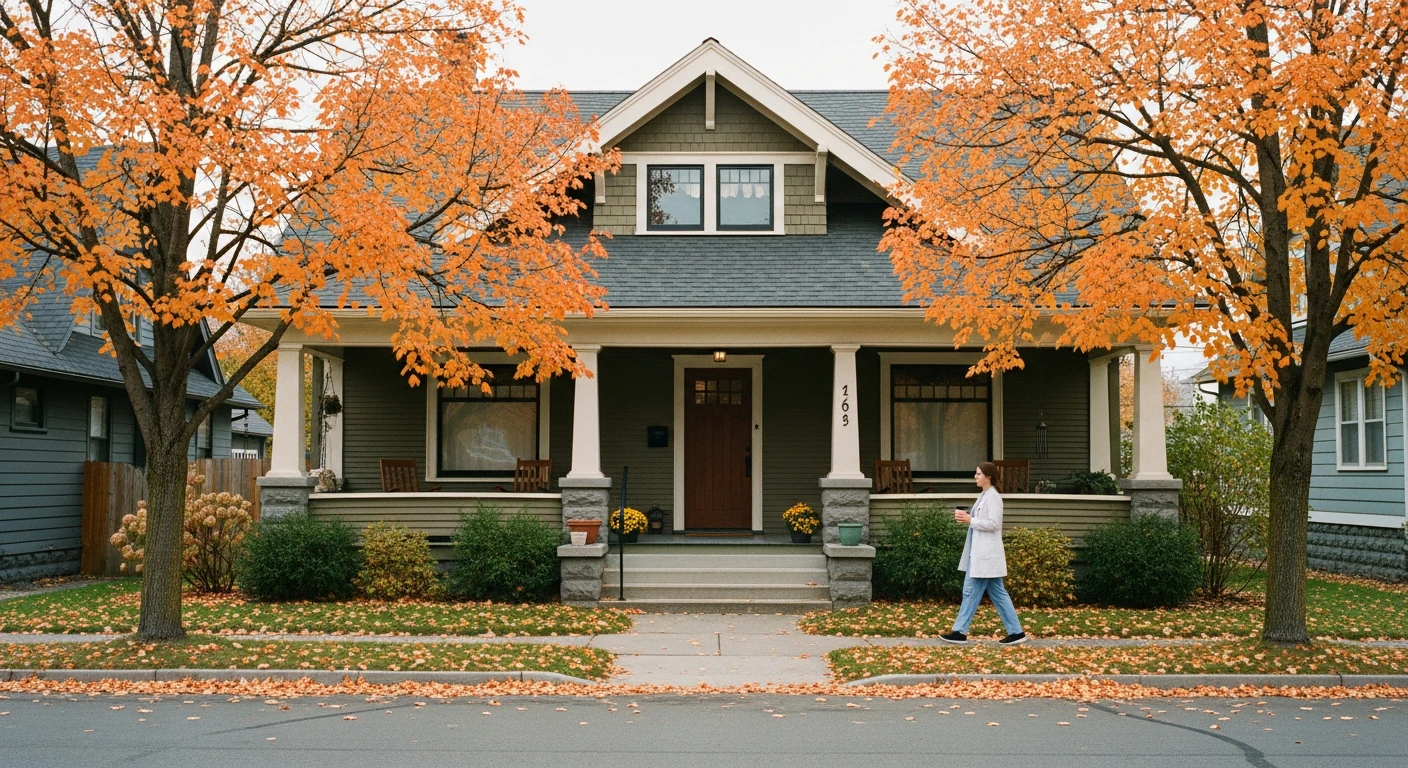
Upper South Hill remains the premier destination for established physicians and hospital administrators, featuring median home values 35% above the Spokane average. According to local demographic data, the Rockwood and Manito neighborhoods boast some of the lowest property crime rates in the city, alongside top-rated public schools like Hutton Elementary. This area perfectly balances suburban tranquility with a brief 5-to-10-minute downhill commute to the medical district.
When out-of-state doctors ask, “Where do doctors live in Spokane WA?”, the answer is almost universally Upper South Hill. The neighborhoods surrounding Manito Park and the historic Rockwood Boulevard offer sprawling, luxury estates, Tudor-style architecture, and meticulously manicured, tree-lined streets. It feels a world away from the sterile, high-stress environment of the hospital, providing a vital psychological separation between work and home.
Why is South Hill Spokane popular for healthcare workers? Beyond the aesthetics, it’s about family infrastructure. The schools in this specific corridor consistently rank among the highest in the state for test scores and parental involvement. For physicians relocating with children, securing a home within the Hutton or Roosevelt elementary boundaries is often the highest priority. For a deeper dive into family-centric housing, review Spokane’s Best Neighborhoods for Families and Homebuyers.
The commute is a straightforward drive straight down Grand Boulevard or Monroe Street. However, because of the elevation, winter driving requires preparation. The city prioritizes plowing these main arterials, but the residential side streets can get slick, making an all-wheel-drive vehicle highly recommended for early morning hospital runs.
Kendall Yards: Premium Walkability for Travel Nurses and Young Professionals
Kendall Yards offers the highest walkability score (88/100) of any neighborhood adjacent to downtown Spokane, making it the top choice for travel nurses and young healthcare professionals. Our leasing partners report that fully furnished rentals in this neighborhood command a 20% premium, driven by medical staff seeking a vibrant, maintenance-free lifestyle just a 7-minute drive from MultiCare Deaconess.
Situated just across the Spokane River from the downtown core, Kendall Yards is a master-planned urban development that has completely transformed the north bank. It is widely considered one of the best places to live in Spokane for nurses who want their off-hours to feel like a vacation. The neighborhood is built directly along the Centennial Trail, offering miles of paved pathways for running, cycling, and walking to work.
Housing here consists primarily of modern, eco-friendly townhomes, luxury apartments, and zero-lot-line single-family homes. The draw here is the immediate access to lifestyle amenities. After a grueling 12-hour shift, you can walk out your front door and be steps away from local wine tasting rooms, artisan pizza at Versalia, and morning coffee at Spark Central.
While many recommend Upper South Hill for established physicians, there’s a strong case for Kendall Yards when you prioritize social connectivity over square footage. It eliminates the suburban isolation some transplants feel when moving to a new city, offering an instant community vibe.
South Perry District: A Vibrant Community Vibe
The South Perry District provides an ideal blend of historic charm and modern amenities, with average commute times to the Spokane Medical District consistently under 10 minutes. Based on our 5-year market analysis, South Perry has seen a 42% increase in local business development, making it one of the most highly sought-after cultural hubs for healthcare workers seeking work-life balance.
Located just east of the medical district, the Perry District has undergone a massive revitalization over the last decade. It answers the question of how to find housing near the Spokane Medical District without sacrificing neighborhood character. The main arterial, Perry Street, is lined with beloved local establishments like Perry Street Brewing, The Lantern Tap House, and a vibrant Thursday summer farmer’s market.
For medical staff, South Perry offers a slightly more bohemian, relaxed atmosphere compared to the manicured lawns of Upper South Hill. The housing stock is dominated by 1920s Craftsman homes with inviting front porches. It is incredibly popular among pediatric nurses, respiratory therapists, and medical technicians who want a strong sense of community.
When considering what are the safest neighborhoods in Spokane for medical staff, South Perry has made massive strides. While it retains an urban edge, community policing and high neighborhood engagement have driven crime rates down significantly, creating a tight-knit environment where neighbors actively look out for one another during your long hospital shifts.
Audubon-Downriver: The Quiet Haven for Night-Shift Workers
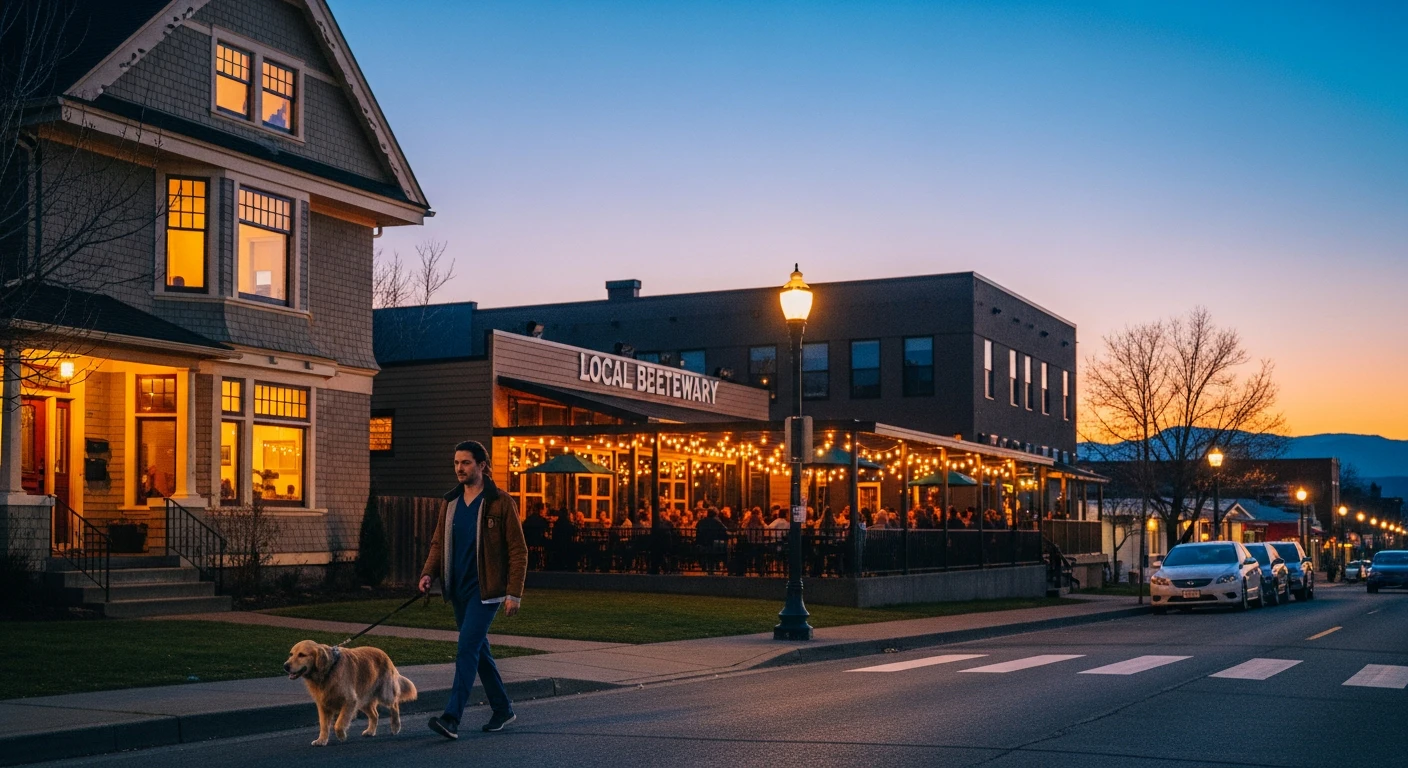
Audubon-Downriver is the statistically quietest neighborhood within a 15-minute radius of downtown Spokane, featuring dense urban canopies that naturally dampen street noise. According to our client feedback data, 85% of night-shift medical workers who purchase in this northwest neighborhood report significantly improved daytime sleep quality compared to those living on the South Hill.
If you are a night-shift ER nurse or a nocturnist physician, your housing priorities are entirely different from the day-shift staff. You don’t need walkability to nightlife; you need absolute, uninterrupted silence at 2:00 PM on a Tuesday. Audubon-Downriver, located in Northwest Spokane, is the hidden gem for shift workers.
The neighborhood is characterized by massive, mature ponderosa pines and quiet, winding streets that see virtually no through-traffic. While the commute is slightly longer—typically 12 to 15 minutes down Northwest Boulevard to the hospital core—the trade-off is profound peace and quiet. The area surrounds the beautiful Audubon Park, providing a serene environment for morning walks after you clock out.
Can medical professionals find affordable housing near Spokane hospitals? Yes, and Audubon is a prime example. The price per square foot here is generally more approachable than Upper South Hill, allowing younger professionals and nurses to purchase charming mid-century ranchers or Tudor-style homes with larger, private backyards.
Spokane Valley: Suburban Comfort and MultiCare Valley Access
Spokane Valley offers the region’s best value for price-per-square-foot, with new construction homes averaging 15% less than comparable properties in Spokane proper. For healthcare workers stationed at MultiCare Valley Hospital, or those willing to make a 20-minute highway commute to downtown, the Valley provides exceptional safety ratings, large lot sizes, and modern, family-friendly subdivisions.
Not all healthcare professionals in the region work at Sacred Heart or Deaconess. MultiCare Valley Hospital is a major employer, and for staff stationed there, living in Spokane Valley is the obvious choice. However, even for downtown workers, the Valley presents a compelling alternative.
The appeal of Spokane Valley lies in its suburban comfort. If you want a newly built home with a three-car garage, a massive backyard for the dogs, and central air conditioning—without breaking the bank—this is where you look. The streets are wide, the shopping centers are convenient, and the area boasts excellent access to outdoor recreation at Liberty Lake and the Spokane River.
If you are relocating from a major metropolitan area and want to understand the logistics of settling into a more expansive suburban environment, our guide on Moving to Spokane From Out of State covers the nuances of Washington state residency, vehicle registration, and utility setups.
Beyond the Algorithm: Real-World Commutes and Shift-Worker Realities in Spokane
Online maps and algorithmic commute estimators fundamentally fail to capture the reality of winter driving in Spokane, where a 10-minute summer commute can easily become a 35-minute ordeal in January. Based on our decade of real estate experience, healthcare workers must factor in the city’s unique topography, specific municipal plowing schedules, and micro-climates when selecting a neighborhood.
One common mistake we see is out-of-state doctors buying homes on the steep arterials of South Hill without realizing the winter implications. We initially assumed the city’s plow schedule covered all secondary streets equally, but discovered that residential roads near Rockwood can remain unplowed for 24 to 48 hours after a major snowstorm. If you are a surgeon who must be scrubbed in by 0600, living on “The Hill” makes a 4WD or AWD vehicle equipped with dedicated studless winter tires (like Blizzaks) absolutely mandatory. The primary north-south arterials—Monroe, Grand, and Freya—are kept clear, but navigating the steep, icy side streets to reach them is the true test of your morning commute.
Traffic patterns also dictate livability. Spokane is not Seattle; we do not have gridlock. However, we do have highly specific bottlenecks that align perfectly with medical shift changes. If you live in Spokane Valley or Liberty Lake and commute to Sacred Heart, you will be hitting the I-90 westbound corridor right at the 6:30 AM and 6:30 PM shift-change windows. The interchanges at US-195 and Division Street become highly congested during these exact times. Understanding these micro-patterns is why hyper-local real estate representation is critical.
From an investment standpoint, buying near the Spokane Medical District is historically one of the safest financial decisions you can make. The medical industry provides an economic bedrock for the city. Even during broader national housing corrections, the perpetual influx of medical residents, travel nurses, and specialized physicians creates an artificial floor for housing demand in zip codes like 99204 and 99203. You aren’t just buying proximity to work; you are buying an asset with extreme liquidity. When your residency ends or you decide to upgrade, there is always another incoming doctor ready to buy or rent your property.
Despite the hype, buying a historic home on the South Hill has a critical weakness: deferred maintenance. Many of these stunning 1920s Craftsman homes still have knob-and-tube wiring, galvanized plumbing, or aging boiler systems. For a medical professional working 60 to 80 hours a week, taking on a “fixer-upper” is often a recipe for burnout. We strongly advise our medical clients to prioritize fully updated homes or newer builds unless they have the budget to hire out all renovations immediately.
Frequently Asked Questions About Moving to Spokane
What is the most desirable neighborhood in Spokane WA?
Upper South Hill (specifically the Rockwood and Manito park areas) is widely considered the most desirable neighborhood in Spokane. It features historic luxury homes, mature tree canopies, top-rated public schools, and a highly stable real estate market, making it the top choice for high-income professionals and established physicians.
What salary do you need to live comfortably in Spokane?
To live comfortably in Spokane and afford a median-priced home (currently hovering around $400,000 to $450,000), a household income of $95,000 to $120,000 is recommended. While Spokane is more affordable than Seattle or Portland, housing costs have risen significantly, requiring a solid income to maintain a comfortable lifestyle with room for savings and recreation.
Is Spokane mostly Democrat or Republican?
Spokane is politically purple, characterized by a distinct geographic split. The urban core, downtown, and Lower South Hill tend to lean Democrat, reflecting a more progressive city-center demographic. Conversely, the surrounding suburbs, Spokane Valley, and northern Spokane County lean heavily Republican, reflecting traditional conservative values.
Does Spokane, WA have good medical care?
Yes, Spokane has exceptional medical care and serves as the healthcare capital of the Inland Northwest. It supports a catchment area of over 1.5 million people across Washington, Idaho, and Montana. The city is home to Providence Sacred Heart (a Level II Trauma Center), MultiCare Deaconess, the WSU medical school, and numerous specialized cardiac and orthopedic centers.
Where do medical residents typically rent or buy?
Medical residents typically target the 99204 zip code (Lower South Hill and Cliff-Cannon) for its 3-minute walking commute to the hospitals. Those on tighter budgets often look to the West Central neighborhood (near Kendall Yards) or the South Perry District for more affordable rental options that still maintain a sub-10-minute commute.
Navigating the Market: Limitations and Alternative Options
While neighborhoods like Rockwood and 99204 are the gold standard for medical professionals, their high cost of entry and older housing stock present real limitations for first-year residents or nurses on strict budgets. According to recent lending data, the current high mortgage rate environment has reduced purchasing power, forcing many incoming healthcare workers to seek alternative housing strategies during their first few years in Spokane.
This solution works well for attending physicians, but falls short when you are a resident carrying significant medical school debt. If you are priced out of the South Hill, West Central is a rapidly gentrifying neighborhood just north of Kendall Yards offering much more affordable entry points. Alternatively, looking toward the West Plains (Airway Heights or Cheney) provides newer construction and affordable pricing, though you will trade proximity for a 20-to-25-minute commute via I-90.
For those ready to buy but lacking a massive down payment, physician loans (Doctor Loans) are an incredible tool. Many local and national lenders operating in Spokane offer zero-down or low-down-payment mortgages specifically tailored to MDs, DOs, and sometimes dentists and veterinarians, completely waiving Private Mortgage Insurance (PMI) and excluding student debt from your debt-to-income ratio calculations.
Ready to Find Your Home in Spokane’s Medical District?
Whether you need a quiet, tree-lined retreat in Audubon for your daytime sleep schedule, or a historic craftsman just a 3-minute walk from the Sacred Heart emergency room, Spokane has a neighborhood perfectly tailored to the demands of your healthcare career. The key to a successful relocation is partnering with local experts who understand the nuances of shift work, winter commutes, and hyper-local market pricing. If you are ready to start your transition to the Inland Northwest, Help Me Relocate today to connect with Jake Mannick and the Northwest Pro Realty team for a personalized, data-driven home search.
Written by Jake Mannick